18 June 2026 · The Favia Atelier
Pichwai Art Explained: History and How to Style It at Home
The history behind pichwai art and practical ways to style its panels and plates in a modern Indian home.
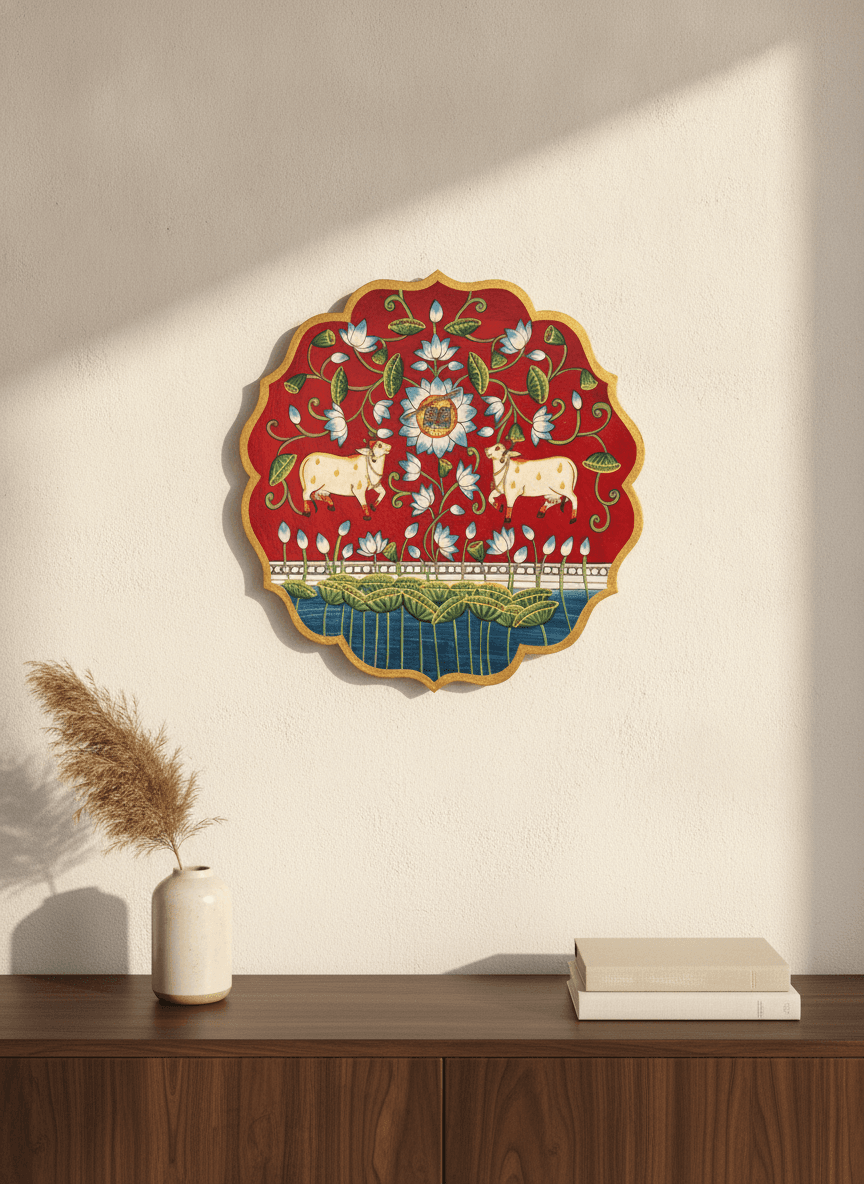
Pichwai is one of those art forms that feels instantly recognisable even if you have never known its name. The lotus ponds, the sacred cows, the rows of devotees, the deep colours edged in gold. It comes from a specific place and a specific devotion, and understanding that origin makes it far easier to style at home with respect rather than as mere decoration.
Where pichwai comes from
The word pichwai means "that which hangs behind," and the paintings were made to hang behind the idol of Shrinathji, a child form of Krishna, in the temple town of Nathdwara in Rajasthan. Artists painted them on cloth to mark seasons and festivals, changing the backdrop through the year so the deity sat against lotus blooms in one season and monsoon clouds in another.
The motifs carry meaning. The cow is sacred to Krishna the cowherd, the lotus speaks to purity rising from water, and the peacock and the season of Sharad Purnima appear again and again. When you bring pichwai home, you are bringing a piece of that devotional language, which is why it sits so naturally near a pooja space.
Styling a pichwai panel
A full pichwai panel is a statement, so let it lead. Hang one on a wall that has room to breathe, a stretch above a console or a low cabinet works well, and keep the surface beneath it relatively spare. The Pichwai Sacred Cow & Lotus Wall Art Panel has the depth of colour to anchor a whole wall, so resist the urge to crowd it with other framed pieces.
Below it, a small grouping of brass or a single idol picks up the gold tones in the painting and ties the vignette together. The aim is a quiet conversation between the art above and the objects below, not a competition.
Working with pichwai plates
Not every home has a wall to spare, and this is where pichwai plates earn their place. Hand-painted plates carry the same motifs at a smaller scale and can be hung in a cluster or propped on a shelf. The Pichwai Sacred Cow Hand-Painted Decorative Plate reads beautifully in a group of two or three, or on its own beside a doorway.
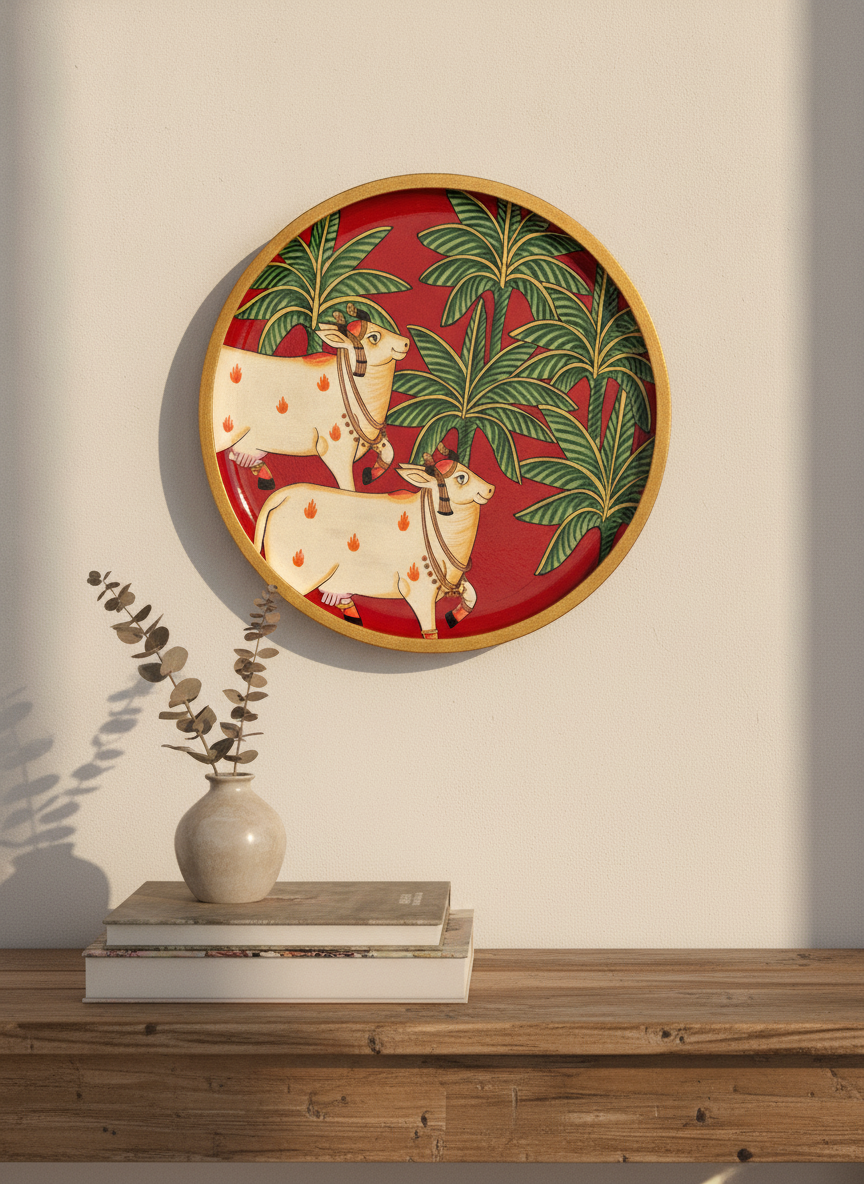
If you want to mix devotional traditions on one wall, pichwai sits comfortably alongside other Krishna art. A Hand-Painted Lord Krishna Devotional Wall Art Plate shares the same world of colour and story, so the wall feels collected rather than random.
Colour and light
Pichwai loves warm light. Its golds and deep greens come alive under a soft lamp far more than under cool overhead lighting, so place a piece where it catches evening light if you can. Against a pale or earthy wall the colours sing. Against a busy patterned wall they get lost, so give them a calm background to work with.
These are hand-painted objects, so small variations between pieces are part of their nature, not a flaw. The artisans we work with paint each one by hand, and that is exactly why no two are quite alike.
Common questions
What is pichwai art?
Pichwai is a devotional cloth-painting tradition from Nathdwara in Rajasthan, originally made to hang behind the idol of Shrinathji. It is known for motifs like the sacred cow, the lotus and the peacock, painted in deep colours with gold detailing.
Where should I hang a pichwai painting at home?
Give it a wall with breathing room, often above a console or near a pooja space. Pichwai responds well to warm light and a calm, plain background, so avoid crowding it with other framed art.
Can pichwai be used outside a pooja room?
Yes. While it began as temple art, a pichwai panel or plate works well in a living room, hallway or dining area as a piece of heritage art, as long as it is treated with the respect its devotional roots deserve.
See the pieces in the wall art and decor collection. For wider guidance, read choosing wall art for Indian homes, and to plan a prayer space around it, our pooja room decor ideas.