18 June 2026 · The Favia Atelier
Pooja Room Decor Ideas: Choosing Idols, Murtis and Devotional Art
A practical guide to choosing idols, murtis and devotional art for a pooja room that feels personal, calm and considered.
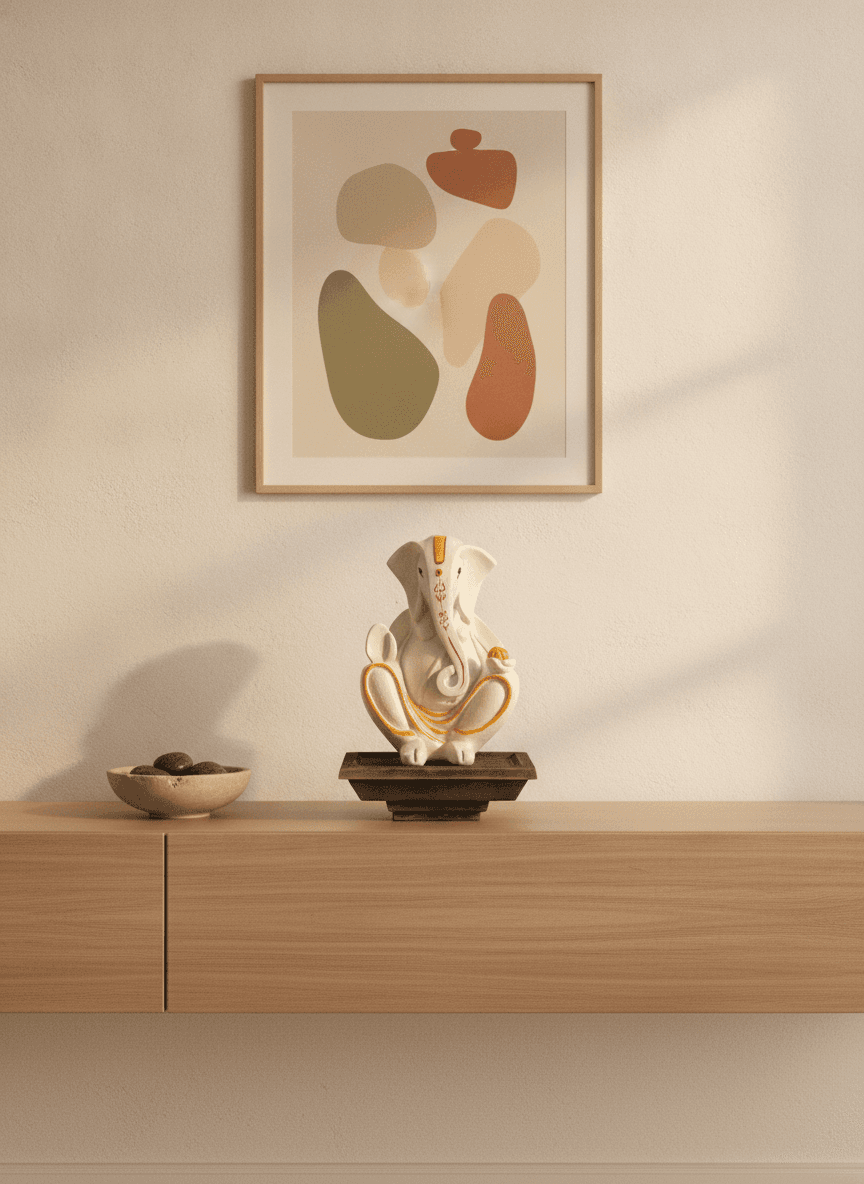
A pooja room does not need to be large to feel right. Some of the loveliest ones we have seen are a single shelf in a hallway or a corner of a bedroom. What matters is that the space feels considered, that the central deity sits at a comfortable height, and that the objects around it earn their place. This guide walks through how we think about choosing idols, murtis and devotional art, and how to bring them together without the room feeling crowded.
Choose the central murti first
Every pooja space has a centre of gravity, and that is usually a single deity that means something to your family. Choose this piece first and build outward from it. A meditative form works well when you want the room to feel still, which is why pieces like the Serene Ganesha Meditative Sculpture sit so naturally at the heart of a shelf. If your devotion centres on Shiva, the Serene Lord Shiva Murti Sculpture with Artisanal Gold Detailing carries that same quiet weight.
Give the central piece a little breathing room. A murti that has space around it reads as the focus. A murti crowded by smaller objects competes with them.
Think about height and eye line
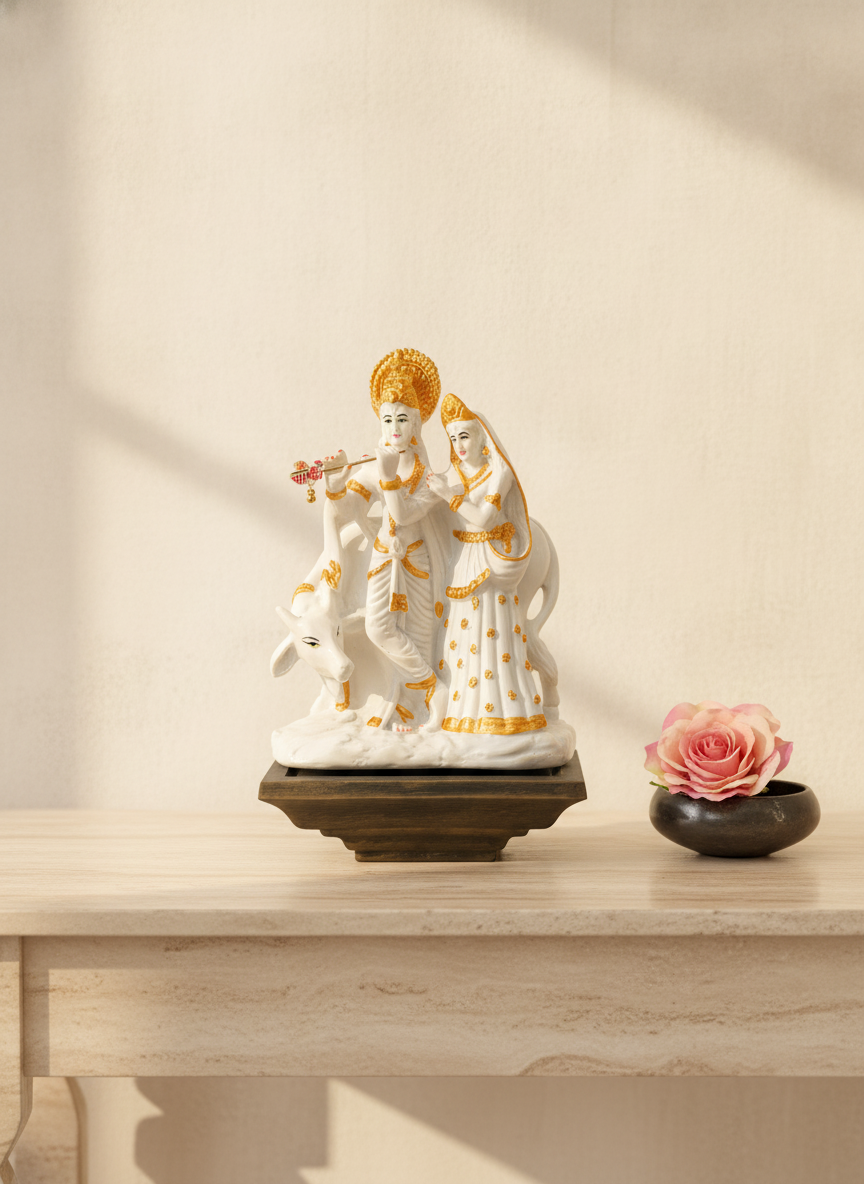
Traditionally the main deity sits slightly above your eye line when you are seated, so you look up rather than down. If your shelf is low, a small raised stand or a folded cloth under the idol lifts it just enough. For couples who pray together, the gentle pairing of a piece like the Radha Krishna Glazed Porcelain Idol with Gold Accents reads beautifully at a shared height, since the two figures already hold the composition together.
Add devotional art on the wall behind
The wall behind the murti is doing more work than people realise. A blank wall can make even a beautiful idol feel adrift. A hand-painted plate or a small panel gives the eye somewhere to rest and frames the deity below. The Hand-Painted Ganesha Chakra Wall Art Plate does this gently, echoing the form on the shelf without repeating it. If your taste runs toward older traditions, a Pichwai Sacred Cow & Lotus Wall Art Panel brings a Nathdwara devotional language into the space.
Keep wall art a touch smaller than you think. It should support the murti, not pull attention away from it.
Keep the surface calm
A pooja room collects things over the years, the diya, the agarbatti stand, the small bell, the photographs. That accumulation is part of its warmth, so the trick is not to strip it back but to give the daily objects their own zone. We like keeping the deity and its art on one clear plane, with the working items grouped just below or to one side. Brass pieces age into a soft patina over time, and that lived-in glow is part of what makes a prayer space feel real.
Natural materials sit well together here. Carved wood, painted ceramic and brass share a handmade quality that machine-made objects rarely have, and the artisans we work with lean into that honesty rather than hiding it.
Common questions
Which direction should a pooja room face?
Many families follow the tradition of facing east or north-east while praying, with the deities placed so the worshipper faces that way. If your home does not allow it, do not worry too much. A clean, quiet, well-lit corner matters more than a perfect compass reading.
Can I mix different deities in one pooja space?
Yes, and most Indian homes do. The usual guidance is to keep one main deity as the focus and let the others sit slightly lower or to the side, so the arrangement has a clear centre rather than several competing ones.
How do I stop a small pooja shelf looking cluttered?
Group the daily working objects together and keep the murti and its backing art on a separate clear plane. Empty space around the main idol is what makes the whole shelf read as calm rather than busy.
When you are ready to choose pieces, browse the full spiritual and devotional collection. For more on a single deity, our guide to Ganesha idols for the home goes deeper, and if pichwai caught your eye, read pichwai art explained.