17 June 2026 · The Favia Atelier
Choosing Wall Art for Indian Homes: Panels, Frames and Plates
A practical guide to picking wall art for Indian homes, covering carved panels, decorative plates and framed groupings that suit real walls.
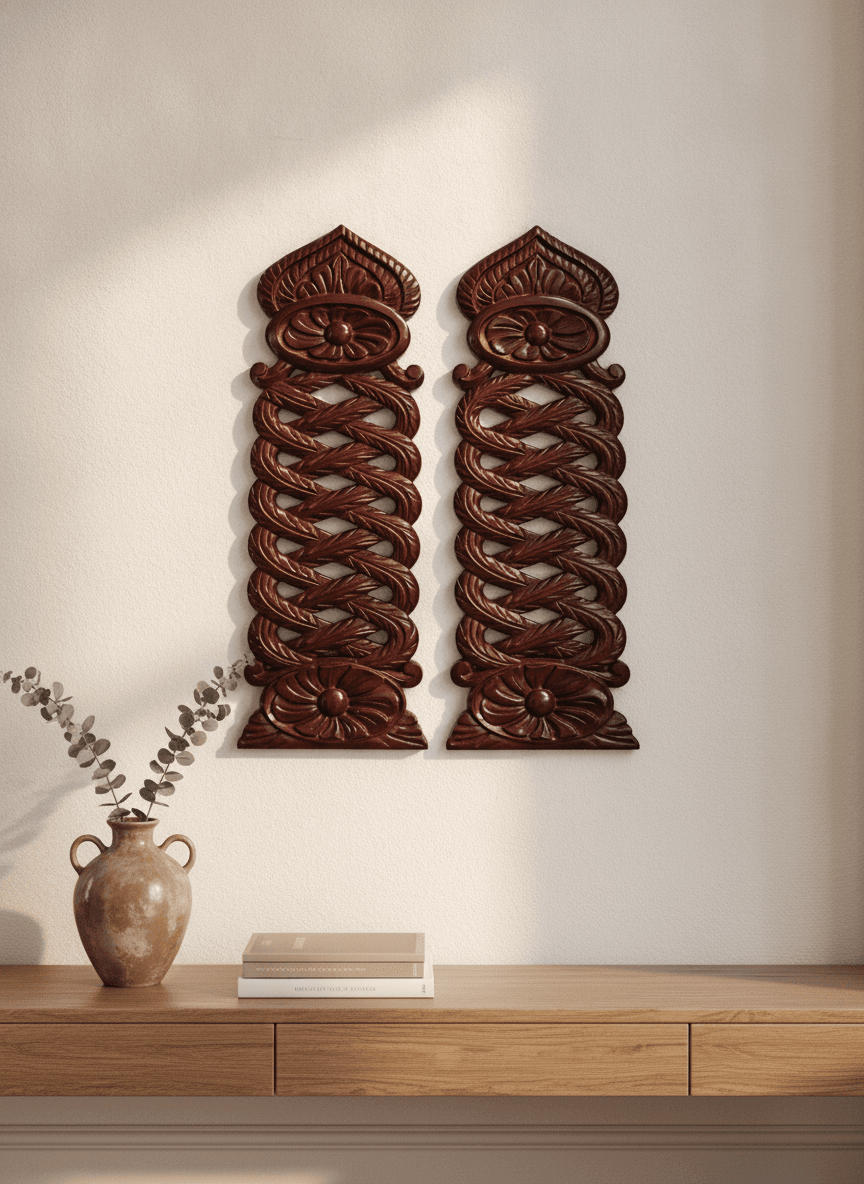
Where to begin with a blank wall
Most people pick wall art last, after the sofa and the rug are in place, and then wonder why the room still feels unfinished. We would argue the opposite. A wall is the largest plain surface in any room, and what you hang there sets the tone for everything below it. In Indian homes, where colour and pattern already do a lot of work, the trick is choosing pieces that hold their own without shouting over the cushions and curtains.
This guide walks through the three formats we get asked about most: carved wood panels, decorative plates, and framed groupings. Each one solves a different problem.
Carved wood panels for texture and depth
A carved panel reads differently from a flat print. Light catches the relief at different times of day, so the piece changes between morning and evening. That movement is what makes wood feel alive on a wall.
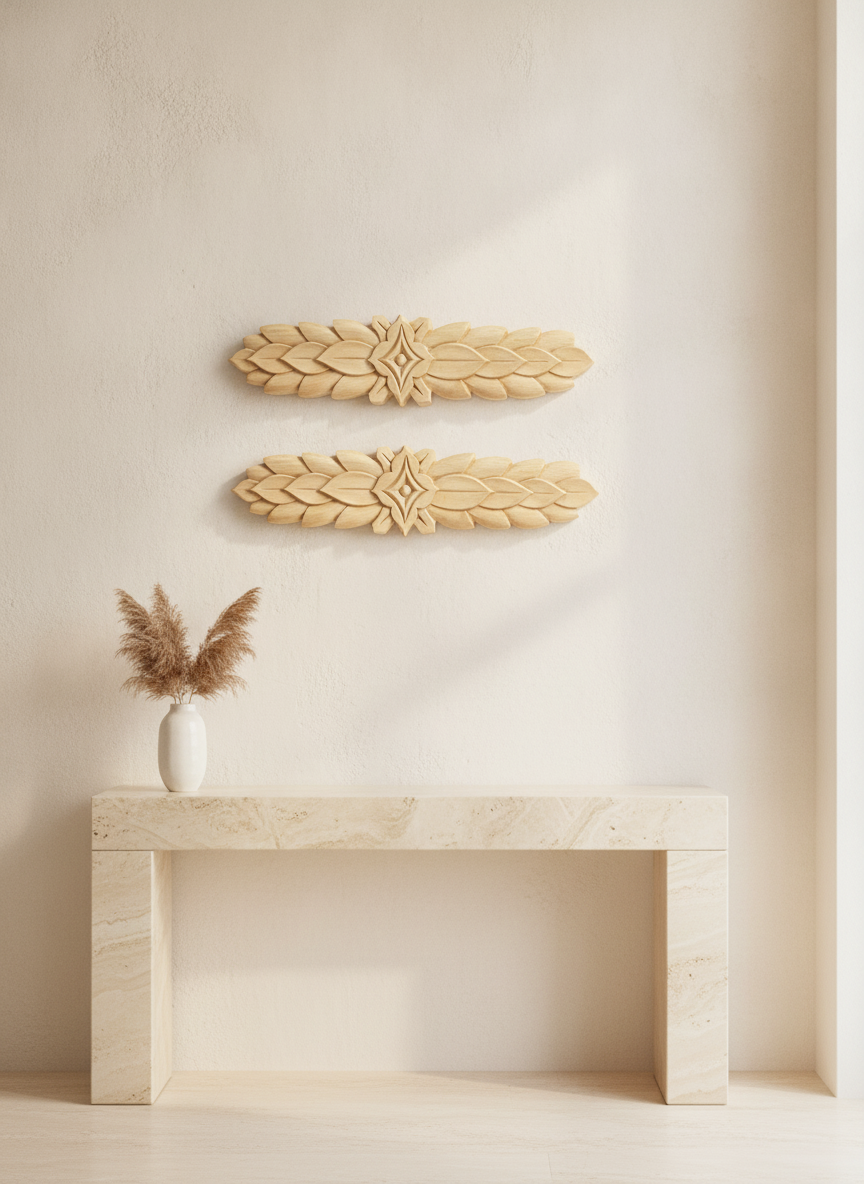
The Regal Bloom Carved Wood Panels work well above a bed or a long console, where the floral relief gives a calm, symmetrical anchor. If your room leans more classical, the Carved Acanthus & Laurel Wood Friezes sit nicely above a doorway or along the top of a wainscot line. Hang carved pieces where they get side light rather than flat front light, and the carving will do the rest.
Hand-painted plates for colour in small doses
Decorative plates are the easiest way to add colour without committing a whole wall to it. They group beautifully, and you can build the cluster over time rather than buying everything at once.
The Pichwai Sacred Cow Hand-Painted Decorative Plate carries a devotional theme that suits a pooja corner or a dining wall, while the Hand-Painted Ganesha Chakra Wall Art Plate brings a warmer, festive palette. Plates also pair well with the Divine Narratives Hand-Painted Wall Discs with Bells (Set of 2), which add a little sound and movement when a window is open.
Mix two or three plate sizes in a loose grid rather than a rigid straight line. Lay them on the floor first, photograph the arrangement, and only then put nails in the wall.
Frames that hold the wall together
Frames give a wall structure. An arched frame in particular borrows from temple and haveli architecture, so it reads as Indian without being literal about it. The Artisanal Carved Wood Arch Frame can hold a small mirror, a print, or simply sit empty as a sculptural shape on its own. For a richer, deeper tone, the Heritage Carved Crimson Wood Archway Frame makes a strong centrepiece on an entryway wall.
Getting the scale right
The most common mistake is hanging art too small and too high. As a rough rule, art should fill about two-thirds the width of the furniture below it, and the centre of the piece should sit around eye level, near 145 to 150 cm from the floor. For a gallery cluster, treat the whole group as one shape and centre that shape, not each individual piece.
Common questions
How high should I hang wall art above a sofa?
Leave roughly 15 to 25 cm between the top of the sofa back and the bottom of the frame. Any higher and the art floats away from the furniture and stops feeling connected to it.
Can I mix wood panels and painted plates on one wall?
Yes, and it often looks better than matching everything. Keep a common thread, such as a shared colour or a similar warmth of wood, so the wall feels collected rather than random.
What goes well in a rented home where I cannot drill freely?
Lean a larger framed piece on a console or shelf, and use a small number of removable hooks for lighter plates. The arch frames look good propped rather than hung, which keeps your options open.
Ready to plan your wall? Browse the full wall art and decor collection to see panels, plates and friezes together. For more on framing choices, read our guide to decorating a console table, and for festive walls see our Diwali home decor ideas.