18 June 2026 · The Favia Atelier
Brass and Metal Decor: How to Style and Care for It
A practical guide to styling and caring for brass and metal decor, from where to place polished pieces to keeping them from tarnishing.
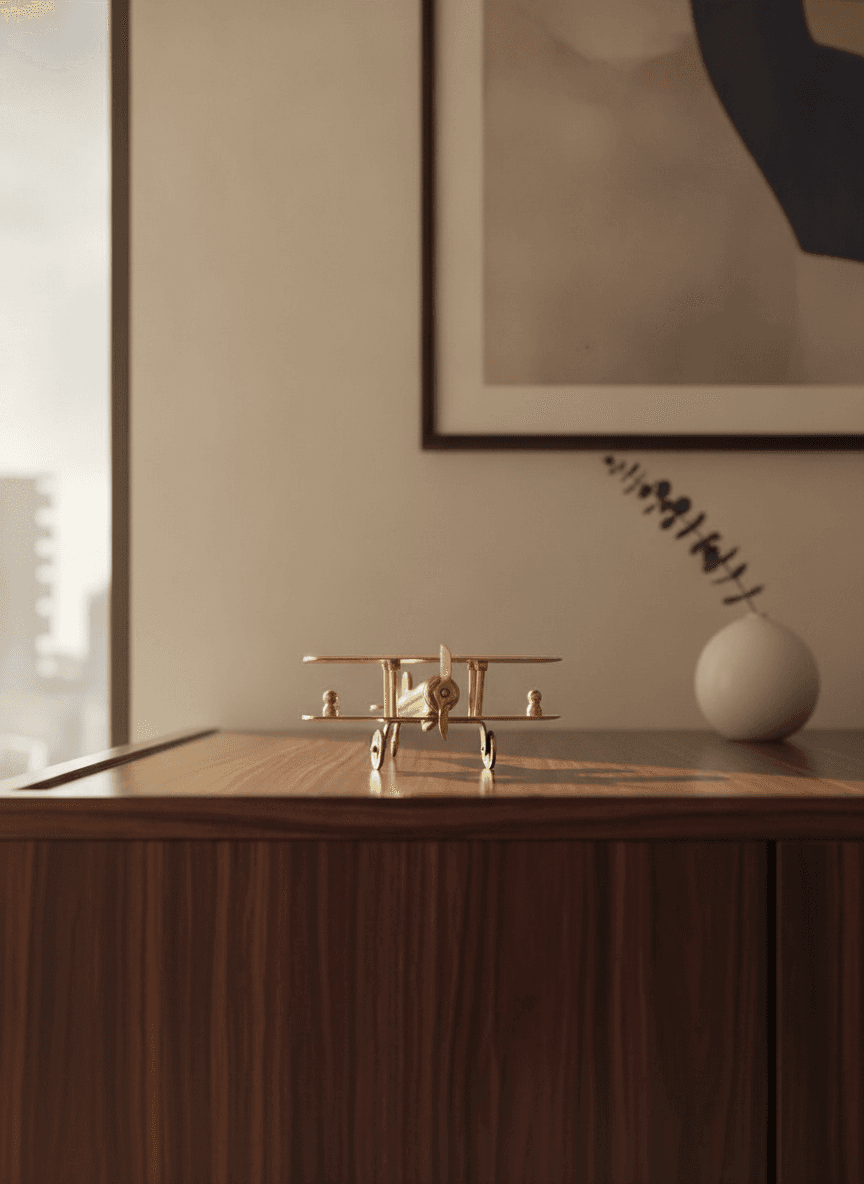
Brass rewards a little attention
Brass and polished metal have a warmth that most decor materials cannot match. The catch is that brass is a living surface. It reacts to air and to the oils on your hands, and over time it darkens. Some people love that aged look. Others want the bright finish kept up. Either way, a little knowledge goes a long way, and the styling side is genuinely easy once you know where these pieces sit best.
Where polished metal wants to be
Metal needs light to show what it can do. A polished surface in a dim corner just looks grey. Set brass where a lamp or window can hit it and the finish does the work for you. A piece like the Polished Golden Brass Biplane Sculpture on a lit shelf catches highlights along every curve, which is exactly why you bought brass and not painted resin.
Style it against the right backdrop
Brass pops hardest against deep, matte colours. A dark green wall, a charcoal bookshelf, a walnut surface. Against busy patterns or other shiny things it gets lost. The Modernist Polished Brass Jet Airplane Model on a plain dark shelf reads as a clear object, while the same piece on a glass table among other reflective bits would muddle.
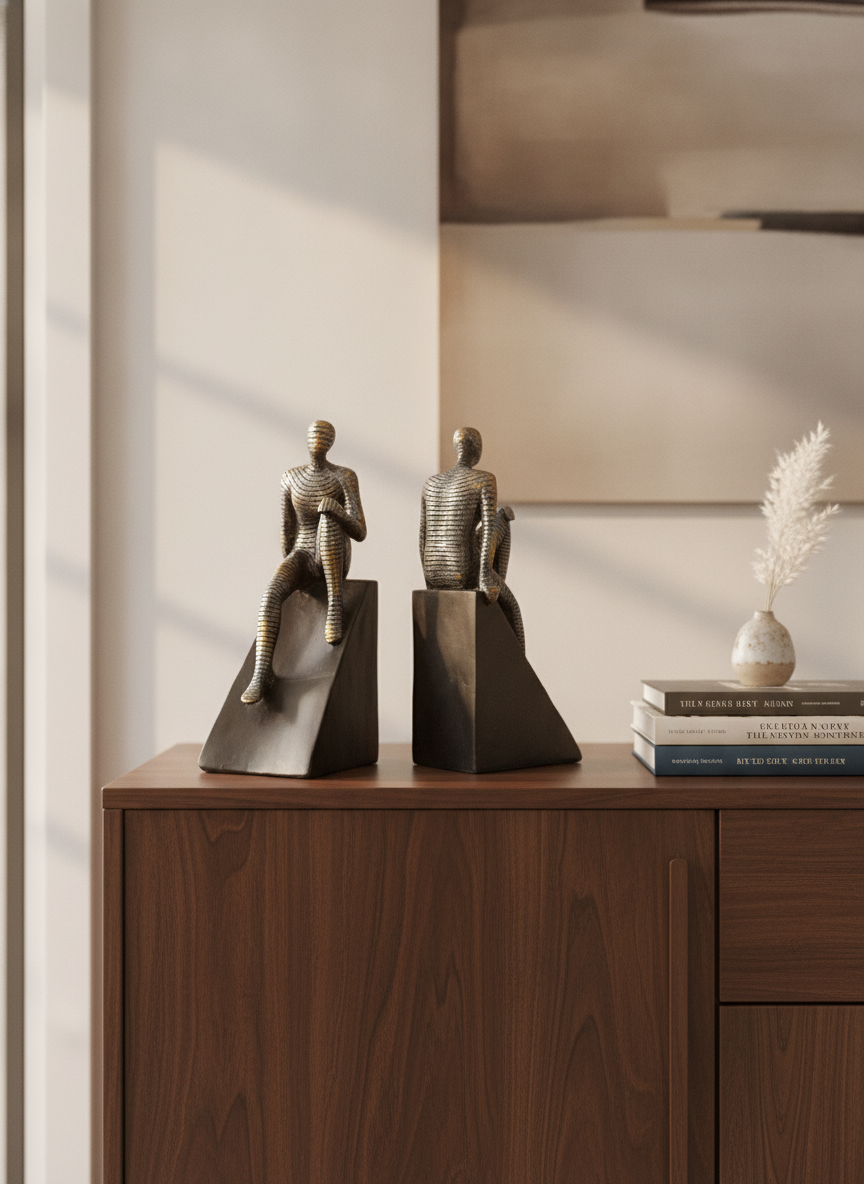
Mix metals, but anchor them
You can mix gold and silver tones if you give the eye an anchor. A piece that already combines both, like the Abstracted Layered Human Figure Bookends, Metallic Gold & Silver, does that job for you and lets you bring in other metals nearby without it looking accidental. For a softer pairing, the warm metallic finish of the Abstract Metallic Contemplation Sculptures (Set of 2) sits well with brass on the same console.
Caring for brass, the simple version
Most brass decor is lacquered, meaning it has a thin clear coating that holds the shine and slows tarnish. For lacquered pieces, all you need is a dry soft cloth and an occasional wipe with a barely damp one. Do not use metal polish on lacquered brass, because it strips the coating and then the piece tarnishes faster than before.
For unlacquered or raw brass, tarnish is normal. If you want the bright finish back, a paste of lemon juice and a little baking soda, rubbed gently and rinsed off, brings it up without harsh chemicals. Dry it fully afterwards. Water left sitting is what causes most spotting.
When to leave the patina alone
That soft, darkened brown brass develops is not damage. On an older or more sculptural piece it often looks better than a mirror shine. If you like it, just keep the piece dusted and leave the chemistry to do its thing. The only patina worth removing is uneven green spotting, which usually means moisture has been sitting somewhere it should not.
Common questions
How do I stop brass from tarnishing so fast?
Keep it dry, keep it out of bathrooms and kitchens where humidity and cooking residue settle, and handle it less, since skin oils speed up tarnish. A lacquered piece in a dry living room can stay bright for years with almost no effort.
Can I use supermarket metal polish?
Only on raw, unlacquered brass, and sparingly. On lacquered pieces it ruins the protective coat. If you are not sure which you have, start with just a dry cloth.
Does brass decor suit a modern home?
Very much so. A single polished metal piece against clean, matte surfaces is a classic contemporary move. The shine reads as a deliberate accent rather than something fussy.
Browse more in Sculptures & Figurines. If you are arranging a surface, our guide to decorating a console table helps, and why handcrafted decor belongs in the modern Indian home makes the wider case for pieces like these.